 how-to
How Do You Hire Insured Christmas Light Installers?
Last Updated: October 25, 2026
Quick Summary
Hire insured Christmas light installers by requesting a certificate of insurance showing current general liability and workers' compensation coverage, verifying the policy with the agent, checking contractor licensing through your state, and calling references to confirm they followed safety practices. Insured installers protect you from liability if damage occurs or an employee is injured on your property.
- Request proof of liability insurance and workers' compensation before work begins and verify the policy is active on installation day.
- Check the certificate of insurance for policy dates, coverage limits, and ask to be listed as an additional insured on the general liability policy.
- Verify contractor licensing through your state's online license lookup if electrical work ties into household wiring or modifies circuits.
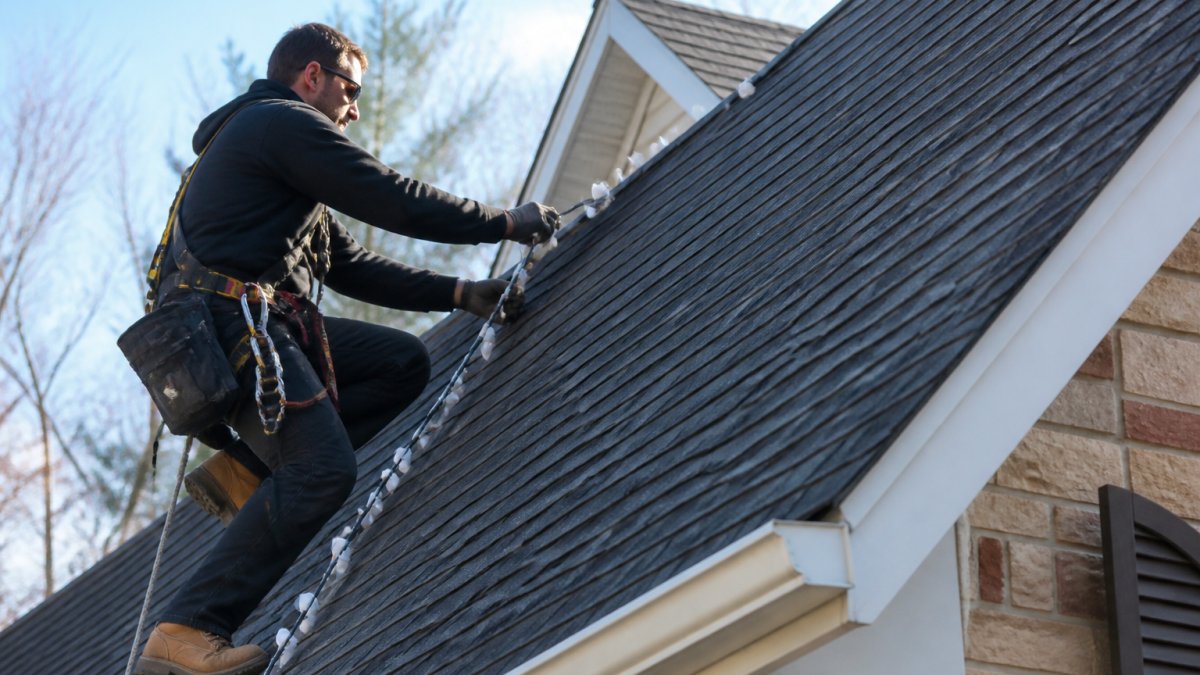
- Ask references whether the installer provided insurance proof upfront and whether they used fall protection and ladder stabilizers on the roof.
- Get a written estimate breaking down design and materials, installation labor, seasonal maintenance, and removal and storage costs.
Table of Contents
- Why Hiring Insured Christmas Light Installers Matters
- How to Verify Insurance and Licensing Before You Hire
- Questions to Ask Christmas Light Installers During Your Consultation
- Understanding Holiday Light Installation Cost and Pricing
- Christmas Light Installation Insurance: What You Need to Know
- Christmas Light Removal and Storage: What Professional Services Include
- Your Step-by-Step Hiring Checklist for Professional Installation
- Book Your Free Consultation and Get Started
- Frequently Asked Questions
Why Hiring Insured Christmas Light Installers Matters
The difference between a beautiful holiday display and a costly liability nightmare often comes down to one decision: whether you hire insured Christmas light installers.
Beyond liability, insured installers bring professionalism to every phase of the job. They carry workers' compensation insurance, which makes them accountable to a carrier that verifies safety practices, and they're more likely to carry general liability coverage that protects your property.
How to Verify Insurance and Licensing Before You Hire
Verification takes ten minutes and saves you thousands.
Start with a direct question: "Can you provide proof of current liability insurance and workers' compensation coverage?" A legitimate installer will email a certificate of insurance on the spot or bring it to your consultation.

Read the certificate of insurance line by line
A certificate of insurance (COI) is a one-page summary issued by the contractor's insurance agent. Check these fields in order:
- Named insured. The business name on the certificate should match your contract and estimate. If a sole proprietor's personal name appears instead of a business entity, confirm that the person quoting you is the named insured.
- Policy effective and expiration dates. The policy must be active on installation day and remain active through takedown. A certificate expiring mid-December is a red flag if work is scheduled for late November.
- Coverage types. You want to see general liability (GL) and, if the installer has employees, workers' compensation. Commercial auto may also appear if they drive to your property with equipment.
Know what each coverage actually protects
General liability covers third-party bodily injury and property damage the installer causes on your property: a ladder through a window, a gutter torn loose, or a passerby injured by falling equipment.
Workers' compensation covers medical costs and lost wages if an employee is injured on your property, the coverage most homeowners overlook.
Your homeowner's policy typically covers accidental damage to your dwelling and personal property but excludes injuries to contractors and their employees, so don't rely on it as a substitute for the contractor's GL and workers' comp.
Check licensing the right way
Licensing depends on the scope of electrical work. Purely decorative low-voltage lighting may not require a license everywhere, but work that ties into household wiring, adds circuits, or modifies a panel generally does.
To verify:
- Ask the installer for their license number and the name of the issuing board.
- Look up the license through your state's online license lookup, usually hosted by the state board that regulates electricians.
- Call your local building department and ask whether a permit is required for the scope you're considering. If a permit is required, confirm the installer will pull it.
- Ask whether the installer carries a local business license or registration if your city or county requires one.
A professional installer will have this information ready and won't be offended when you verify it. If they can't produce a license number for work that requires one, treat that as a disqualifier.
Call references with specific questions
Ask for two or three references from the past season, ideally in your area. Go beyond "were you happy?" Ask:
- Did the installer provide a certificate of insurance before work started?
- Did you verify the policy with the agent, or did you take the certificate at face value?
- Did any damage occur, and how was it handled?
A pattern of vague answers across multiple references is more informative than a single glowing review.
Questions to Ask Christmas Light Installers During Your Consultation
The consultation is your chance to assess whether an installer understands your property and can handle it safely. Don't just ask about price.
"Can you work with the specific design I have in mind, or do you have standard packages?" Some installers are flexible; others prefer templated designs.
"What's your timeline for completion, and how far in advance should I book?" Most installers book up by mid-November.
Understanding Holiday Light Installation Cost and Pricing
Pricing varies widely based on property complexity, lighting amount, and installer experience. Rather than guessing, understand the factors that affect pricing and get a detailed quote from local professionals.
Most installers offer free estimates, so get two or three. Compare what's included, design consultation, labor, materials, removal, and storage. A higher quote with more services can be the better value.
The four line items every complete quote should show
A lump sum is hard to compare against another lump sum. Ask each installer to break the bid into four parts:
- Design and materials. This covers lights, extension cords, clips, timers, and custom-cut lengths. Some installers include commercial-grade outdoor strands in the bid; others quote labor only and expect you to buy materials separately. Ask which model applies before comparing totals.
- Installation labor. This is crew time to hang lights, secure connections, test circuits, and set timers. Labor scales with roofline length, roof pitch, stories, and detail work such as wrapping trees or outlining windows.
- Maintenance during the season. Ask whether mid-season visits for burned-out bulbs or failed connections are included, billed hourly, or billed per visit. A quote including one or two maintenance visits beats one that charges a trip fee each time.
- Removal and storage. Takedown in January is labor too. Confirm whether removal is included or billed separately, and whether storage is included or an add-on.
What drives the total up or down
A few property and scope factors move the price more than anything else:
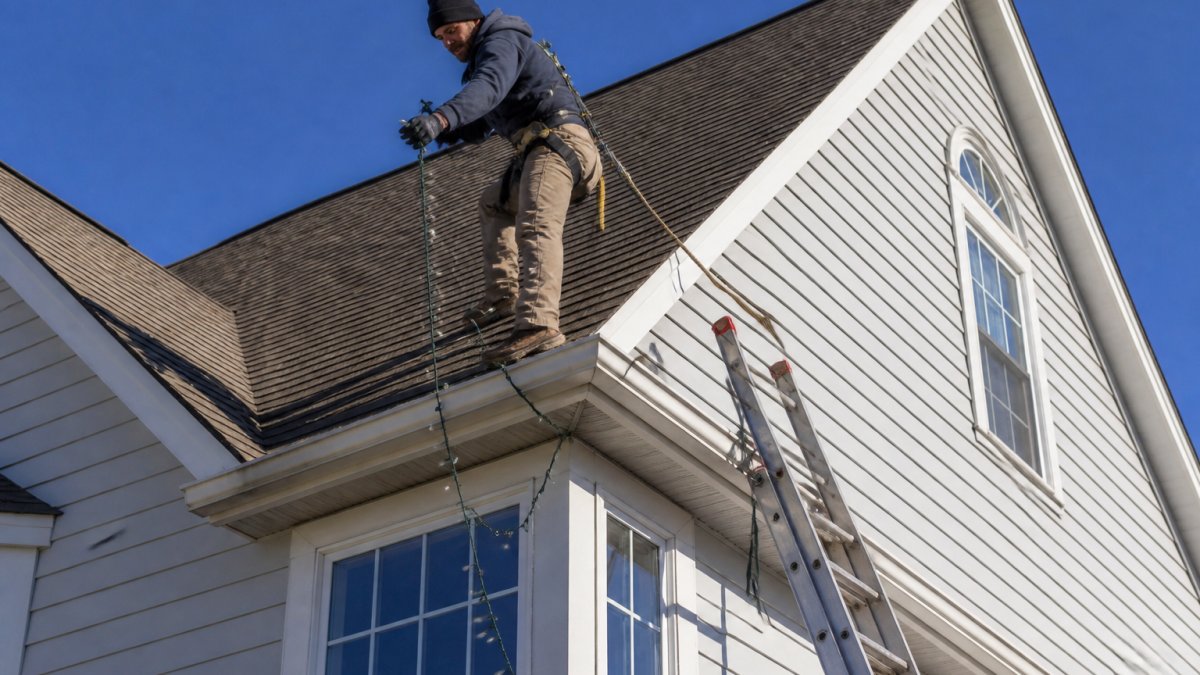
- Roofline length and roof pitch. A single-story ranch with a gentle pitch is faster and safer than a two-story home with steep gables, which require more fall protection and slower crew movement.
- Height and access. Second-story work, tight side yards, and landscaping that blocks ladder placement all add labor time.
- Light type and density. Mini lights, C9 strands, and permanent track systems carry different material costs and installation times. Dense outlining takes longer than sparse accent lighting.
How to spot a labor-only quote
One common surprise is a quote that looks low because it covers labor only: the installer hangs lights you supply, and materials, removal, and storage are separate. That's fine if you own commercial-grade lights, but it isn't comparable to an all-inclusive bid. Ask directly whether the price includes lights, clips, cords, timers, removal, and storage, and get the answer in writing.
Compare the invoice to the estimate
Before you sign, confirm the estimate states the scope, materials, installation window, removal date, and what happens if a strand fails mid-season. If an installer won't put the scope in writing, that signals how the final invoice will be handled.
Get your homeowner's policy in order before you book
Before hiring, ask your homeowner's insurance agent whether they have any specific requirements for contractors working on your property. Some policies require proof of insurance before any work begins. Getting this detail straight upfront prevents disputes later. You should also understand what your insurance covers and what it doesn't so you know exactly what protection is in place.
Christmas Light Installation Insurance: What You Need to Know
Insurance for Christmas light installation protects you in ways most homeowners don't realize.
The contractor's liability insurance covers damage the installer causes to your property, a ladder through a window, a gutter torn off, damaged siding.
Your homeowner's policy typically covers accidental damage to your own property but not injuries to contractors or their employees.
Before hiring, ask your homeowner's insurance agent whether they have any specific requirements for contractors working on your property.
Christmas Light Removal and Storage: What Professional Services Include
Removal and storage are often overlooked until December 26th, when you realize taking down thousands of lights is a bigger job than you thought.
DIY storage often ends in tangled cords, missing lights, and frustration next season. Learn what professional removal and storage services include so you can decide whether it's worth outsourcing.
Storage also protects your investment: lights stored haphazardly in a garage or attic degrade faster, while climate-controlled storage extends their lifespan.
Your Step-by-Step Hiring Checklist for Professional Installation
Use this checklist to ensure you've covered all the bases before hiring.
| Step | Action | Why It Matters |
|---|---|---|
| 1 | Request proof of liability and workers' compensation insurance | Protects you from liability if something goes wrong |
| 2 | Verify insurance is current and covers your property | Ensures coverage is active when work begins |
| 3 | Check contractor licensing with your state or local authority | Confirms they meet legal requirements |
| 4 | Get references and call previous clients in your area | Validates experience and reliability |
| 5 | Ask about safety equipment and fall protection practices | Ensures your property and workers are protected |
| 6 | Get a written estimate that details what's included | Prevents surprise charges later |
| 7 | Clarify timeline, availability, and booking requirements | Helps you plan and secure your preferred date |
| 8 | Ask about maintenance, removal, and storage services | Understands the full scope of what they offer |
| 9 | Confirm what happens if issues arise mid-season | Knows your recourse if problems occur |
| 10 | Review your homeowner's insurance policy with your agent | Understands your coverage and any contractor requirements |
Book Your Free Consultation and Get Started
Hiring insured Christmas light installers is the foundation of a stress-free holiday season. A professional who carries proper insurance, maintains licensing, and understands your property's challenges gives you beautiful lights and peace of mind.
Dramatic Outdoor Lighting offers free consultations where we assess your property, discuss design options, and provide a detailed estimate covering insurance, removal, and storage. Our team is fully insured, and we've served Pinehurst-area homeowners for over a decade, handling everything from custom design to mid-season maintenance to professional removal and storage.
Frequently Asked Questions
How can I verify that a Christmas light installer is insured?
Ask the installer directly for proof of general liability insurance and workers' compensation coverage before signing any agreement. Request a certificate of insurance that shows current coverage dates and policy limits. Verify the insurance company name and policy number by calling the insurer directly or checking their website. Never assume a contractor is insured based on their word alone. A reputable installer will provide this documentation without hesitation and may have it ready in digital or printed form.
What should I ask before hiring a holiday light installer?
Ask about their experience with properties similar to yours, whether they provide the lights or you supply them, what happens if lights fail mid-season, how they handle weather delays, their timeline for installation and removal, insurance details, references from local customers, and whether they offer storage services. Also ask about their design process, whether they offer free estimates, and what warranty or guarantee they provide on their work. These questions help you understand their professionalism and whether they're a good fit for your needs.
How much does professional Christmas light installation cost?
Pricing depends on several factors including the size of your property, the complexity of your design, the number of lights and fixtures, roof pitch and accessibility, whether you supply the lights or the installer does, and your geographic location. Labor-only pricing differs from full-service pricing that includes design, installation, removal, and storage. Request free estimates from multiple installers to compare pricing for your specific property. Most professionals will provide a detailed quote after assessing your home or business in person.
What is usually included in professional Christmas light installation?
Professional installation typically includes a design consultation, installation labor, testing to ensure all lights work properly, and takedown at the end of the season. Many services also offer storage and organization of your lights for the following year. Some installers provide the lights and fixtures as part of their service, while others work with lights you already own. Higher-end services may include 24-hour maintenance during the season if lights fail or need adjustment. Always confirm what's included in your quote before hiring.
Don't wait until November when availability disappears. Request a free consultation with Dramatic Outdoor Lighting today and get your holiday lighting planned, quoted, and scheduled before the season gets busy. We'll verify every detail, answer every question, and make sure your installation is handled safely and professionally from start to finish.