 listicle
Benefits of Professional Christmas Light Storage Services
Table of Contents
- Why Professional Christmas Light Storage Services Save You Time and Stress
- How Professional Christmas Light Storage Services Work
- How to Store Christmas Lights: Best Practices for Longevity
- Christmas Light Removal and Storage: What to Expect
- Christmas Light Storage Cost: Is It Worth the Investment?
- Christmas Light Organization Ideas for a Clutter-Free Off-Season
- DIY Storage vs. Professional Christmas Light Storage Services
- Conclusion
- Frequently Asked Questions
Last Updated: October 18, 2026
Why Professional Christmas Light Storage Services Save You Time and Stress
Professional Christmas light storage services take the tangled boxes, the January ladder work, and the "will these still work next year?" gamble off your plate entirely. At Dramatic Outdoor Lighting, we handle removal, coiling, labeling, and climate-controlled storage as one white-glove service.
Most homeowners face the same January scramble: lights pulled down before the weather turns, dumped in a bin, and left in a garage corner until November.
Professional storage removes that cycle. A crew takes the lights down, checks every strand, and stores them properly, so next season everything is tested and organized, no untangling, no mid-December store runs, no ladder work in freezing rain.
The benefits come down to three things: time returned to you, lights that last longer, and a season that feels like a celebration instead of a chore.
How Professional Christmas Light Storage Services Work
The best way to understand the service is to see the process. Here is how professional Christmas light storage typically runs, from removal to return.
-
Scheduled takedown. A crew removes lights from the roofline, trees, and landscape on a date you choose.
-
Careful coiling. Lights are wound onto reels or into bins to prevent kinks and internal wire stress.
-
Labeling by location. Each bin is tagged so next year's install follows the same layout.
-
Climate-controlled storage. Lights sit in a dry, temperature-stable space away from moisture and rodents.
-
Reinstall. The crew returns the following season with your lights, ready to hang.
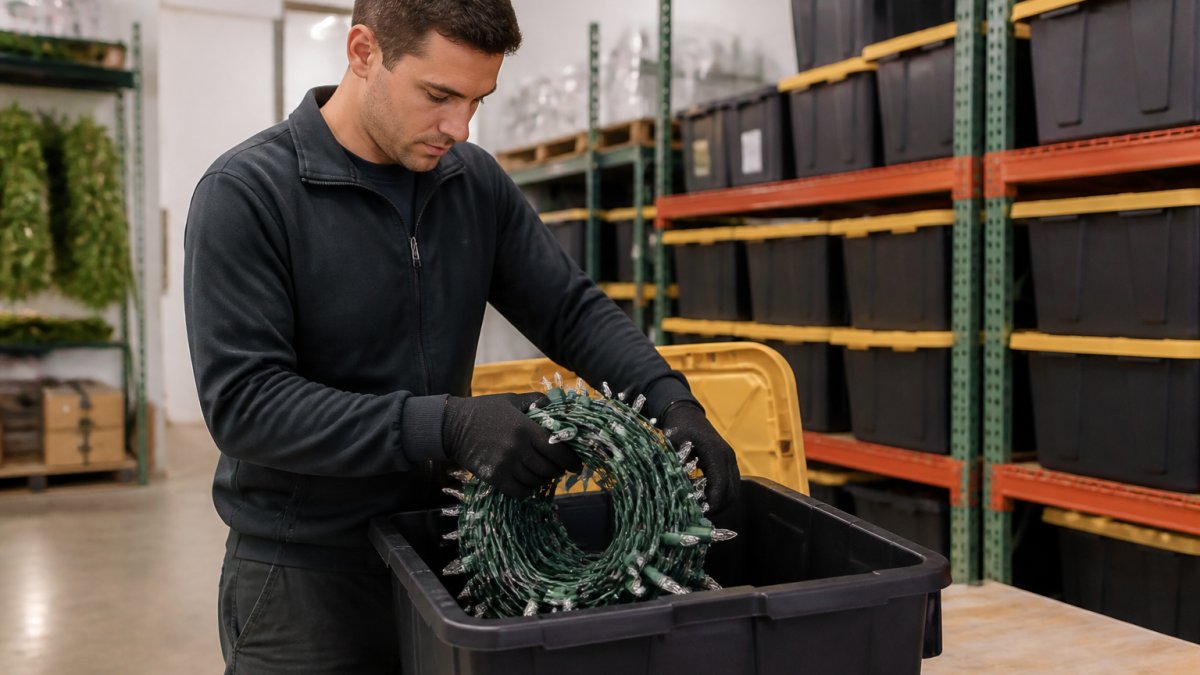
Step five separates a good service from a box in a shed.
How to Store Christmas Lights: Best Practices for Longevity
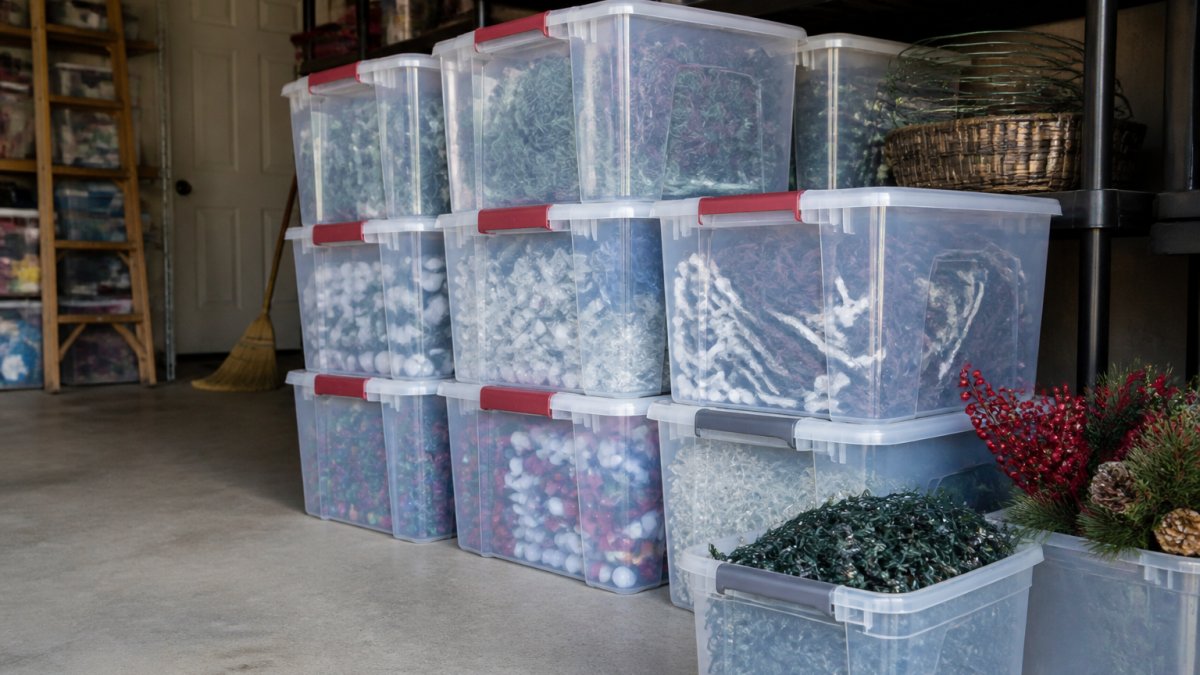
If you handle storage yourself, a few habits make a real difference. The goal is to protect the wire, keep the bulbs from crushing each other, and make next year's setup painless.
- Coil, don't cram. Wrap each strand around a reel or your forearm in loose loops. Tight wads bend the copper inside.
- Use the original packaging or a reel. Cardboard sleeves and plastic reels keep strands separated and labeled.
- Store by location. Keep roofline lights in one bin and tree lights in another so setup follows a plan.
The most common mistake is stuffing lights into a single bin and calling it organized, that guarantees tangles and hidden damage. Treat each strand like the small electrical device it is.
Christmas Light Removal and Storage: What to Expect
Christmas light removal and storage usually happens in a single visit. The crew takes down the display, inspects and coils each strand, and moves everything into storage before leaving your property.
Timing matters. Most services schedule takedown within the first few weeks after the holidays, while the weather is workable and the calendar has room. Booking early locks in your slot before the post-season rush.
Christmas Light Storage Cost: Is It Worth the Investment?
Christmas light storage cost is rarely a single line item. Most full-service providers bundle storage into a seasonal package with design, installation, maintenance, takedown, and off-season storage. Knowing which model a provider uses tells you more than any single number.
What actually drives the price
Storage pricing tracks the size and complexity of your display far more than the square footage of your property. The main cost drivers are:
- Strand count and total linear feet. A roofline-only display of a few hundred feet prices very differently from a full-property display with trees, walkways, and landscape features.
- Commercial-grade versus retail lights. Commercial strands are heavier, longer, and cost more to replace, which is reflected in the service plan.
- Storage format. Reels, labeled bins, and inventory tracking take labor and warehouse space; a provider that coils and tags every strand charges for that handling.
- Climate-controlled versus ambient storage. A dry, temperature-stable facility costs more to operate than a standard unit, and that difference shows up in the plan.
The three pricing models you will see
- Fully bundled seasonal package. Storage is included with installation, maintenance, and takedown. You pay one seasonal price and never see a separate storage charge.
Ownership, replacement, and damage: the questions that change the math
Cost is not just the invoice. Ownership, replacement of failures, and damage or loss in storage all affect what you spend over several seasons.
- Who owns the lights? In most full-service packages, the provider supplies and owns the commercial-grade lights, and storage is part of keeping their own inventory in service. In standalone storage arrangements, you typically own the lights and the provider stores them.
- Who replaces failed strands? A bundled package usually includes in-season maintenance and replacement of failed strands at no additional charge. Standalone storage may cover storage only, with replacement billed separately.
- What if a strand is damaged or lost in storage? A clear written policy should state whether the provider replaces damaged or lost items, caps liability, or excludes certain items. Ask for that policy in writing before you sign, a provider that will not put it in writing is telling you something.
- What about lights you supply yourself? Many providers will store homeowner-supplied lights but limit liability for them, and some will not store retail-grade strands at all because they fail too often to warranty.
Is it worth it?
It depends on the size of your display and the value of your time. For a few strands, DIY storage is inexpensive and reasonable. Once you manage roofline runs, multiple trees, and landscape lighting, replacement costs, takedown and reinstall hours, and the risk of ladder work in bad weather usually outweigh a bundled plan. The value is not shelf space, it is lights that come back tested, labeled, and ready to hang.
Christmas Light Organization Ideas for a Clutter-Free Off-Season
Good Christmas light organization ideas start with one rule: every strand needs a home, and every home needs a label. That habit frees garage space and makes setup predictable.
Here are organization ideas that work whether you store lights yourself or hand them off:
- Reels over bins. A reel per strand keeps lights separated and tangle-free.
- Label by zone. Tag bins "roofline," "front trees," "walkway" so installation follows a map.
- Photograph your display. A phone photo of last year's setup makes reinstall faster.
- Keep an inventory list. Note strand counts and any replacements so you can reorder the same style.
For homeowners short on space, off-season storage solves the clutter problem outright: garage, attic, and closets stay clear, and your lights live somewhere designed for them.
DIY Storage vs. Professional Christmas Light Storage Services
Most comparisons focus on installation, not storage. The real question is what happens to your lights between seasons, and there, DIY and professional storage differ in ways that show up over several years.
Time: the hidden cost of DIY
DIY storage is a chain of tasks: remove the lights (often in cold, wet weather), untangle and coil each strand, test, pack, haul bins to the garage or attic, then reverse it all next season.
Professional storage collapses that chain into scheduled visits. The crew removes, inspects, coils, labels, and stores the lights, then returns them tested and ready to hang.
Space: your garage versus a facility built for it
DIY storage consumes prime real estate, garage corners, attic shelves, for eleven months a year, and that space is rarely climate-stable. Professional storage moves the footprint off-site to a facility designed for it, freeing your garage and keeping lights out of damp, heat, and pests.
Product lifespan: where the gap is widest
Light strands fail for predictable reasons: moisture corroding contacts, heat degrading insulation, pests chewing wire, and tight coiling stressing the copper. A garage or attic exposes lights to all four; a dry, temperature-stable space with proper coiling avoids them.
Professionally stored commercial-grade lights tend to last many seasons, while DIY-stored retail strands often fail within a few. That gap compounds: replacement costs, mid-season store runs, and redoing sections add up fast.
Cost: comparing the right things
A fair comparison puts the full DIY cost against the full professional cost, not the storage fee against zero.
- DIY cost includes your time (takedown, coiling, testing, packing, reinstall), replacement strands and bulbs, storage bins and reels, and the garage or attic space you give up.
- Professional cost is the seasonal package or storage add-on, which typically bundles takedown, inspection, coiling, labeling, climate-controlled storage, pre-season testing, and reinstall.
For small displays, DIY can genuinely be cheaper. For larger ones, the professional package usually wins once you count replacements and your own hours, and clearly once you count ladder work in bad weather.
Storage conditions and security: the questions DIY cannot answer
DIY storage has no security, insurance, or quality-control layer. Professional storage should.
- What are the storage conditions? Is the space climate-controlled, dry, and protected from pests?
- How are lights tracked? Are strands labeled by location and inventoried so the same layout returns next season?
- What security protects the facility? Access control, monitoring, and restricted entry are reasonable expectations for a professional facility.
- Is the stored inventory insured? Ask whether the provider's coverage extends to stored lights and what the liability limits are.
A provider that answers these clearly offers what DIY cannot: accountability for your lights while they are out of your hands.
The bottom line
DIY storage is fine for small, simple displays and homeowners who enjoy the ritual. Professional storage wins once your display grows, your schedule tightens, or you want lights back tested, labeled, and ready to hang. The honest test is not the storage fee but the total cost of time, replacements, and risk over several seasons.
Conclusion
The holidays should end with good memories, not a garage full of tangled wire and a ladder in the cold. Professional storage returns your time, protects your investment, and makes next season's setup effortless.
Dramatic Outdoor Lighting offers custom lighting design, white-glove installation, 24-hour maintenance, and complete removal and storage in one seasonal package. Request a free consultation and let us handle the lights while you enjoy the season.
Frequently Asked Questions
What are the benefits of professional Christmas light storage services?
Professional Christmas light storage services save you time and hassle by handling removal, organization, and storage. Lights are untangled and stored in climate-controlled conditions, reducing damage and extending their lifespan. This convenience means you avoid ladder work and packing, and your lights are ready to go next season. Many services also include maintenance and repair, ensuring your display looks great year after year.
How should Christmas lights be stored to prevent damage?
To prevent damage, store Christmas lights in a cool, dry place away from sunlight. Use reels or specialized storage bags to keep strands untangled, and label each container by location or type. Avoid crushing or stacking heavy items on top of lights. Professional storage services use these methods and often add climate control to prevent moisture and pest damage, ensuring your lights work when you need them.
Is professional Christmas light storage worth the cost?
For many homeowners, professional storage is worth the cost because it saves time, reduces stress, and protects your investment. The cost varies based on the number of lights and service level, but it often pays for itself by extending the life of your lights and eliminating the need to replace damaged strands. It also frees up valuable storage space at home and ensures your holiday display is always ready.
What is included in a Christmas light removal and storage service?
A typical removal and storage service includes taking down lights from your roofline, trees, and landscaping, carefully packing them into organized containers, and transporting them to a secure storage facility. Many providers also repair lights before storing them, and some offer inventory tracking so you know exactly what you have. This full-service approach means you don't have to lift a finger.