 how-to
How to Hang Christmas Lights on Steep Roofs Safely
Table of Contents
- Before You Climb: Tools, Clips, and Roof Assessment
- How to Hang Christmas Lights Without a Ladder
- Christmas Light Clips for Shingles: What Holds on a Steep Pitch
- Christmas Light Installation Safety Tips for Steep Roofs
- Step-by-Step: Hanging Lights on a Steep Roof
- When to Call for Professional Christmas Light Installation
- Warranties, Damage, and Mid-Season Repairs
- Conclusion
- Frequently Asked Questions
Last Updated: October 19, 2026
Before You Climb: Tools, Clips, and Roof Assessment
Hanging lights on a steep roof starts long before anyone touches a ladder. Most injuries and callbacks trace back to skipping the assessment step.
What You'll Need
Gather your gear before you climb. Missing a clip halfway up a pitch is how people get hurt.
- Extension ladder with stabilizer arms
- Roof harness and anchor point
- Non-slip shoes with soft soles
- Light clips rated for your roof type
- Extension cord with GFCI protection
- Outdoor-rated LED light strands
- Wire ties or gutter clips for slack
- Helper on the ground
Reading Your Roof Pitch and Surface
Roof pitch is the angle of the roof, measured as rise over run. A 6/12 pitch rises 6 inches for every 12 inches of run. Anything above 6/12 is steep, and above 8/12 you should be harnessed.
Surface matters just as much. Asphalt shingles, metal, tile, and wood shake each need different clips. The OSHA fall protection guidance for residential roofs treats steep pitches as a serious fall hazard, and that applies to homeowners too.
How to Hang Christmas Lights Without a Ladder
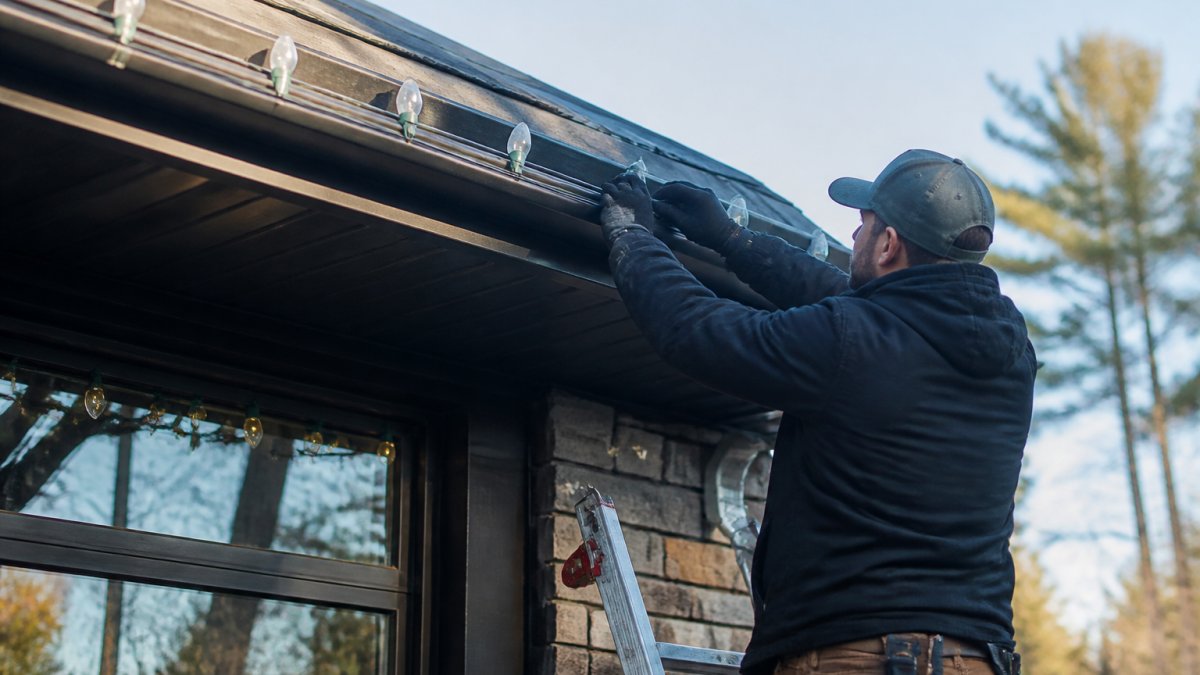
You can hang lights on many steep roofs without ever standing on the roof. The trick is reaching from the ground or from a stable ladder base.
Ground-level methods that work:
- Extension pole with a clip adapter: attach clips, then push the strand up along the eave.
- Gutter clips from a step ladder: safe for single-story eaves only.
- Ridge clips from a second-story window: reach the run without climbing.
- Light-hanging pole kits: designed for exactly this job.
These methods keep your feet planted. For two-story homes with wide overhangs, they often can't reach the ridge line safely, and that's when professional Christmas light installation makes more sense.
Christmas Light Clips for Shingles: What Holds on a Steep Pitch
Clip choice decides whether your lights survive the first windstorm. On steep pitches, gravity and wind work against you, so the clip has to grip hard.
| Clip Type | Best For | Holds on Steep Pitch? | Notes |
|---|---|---|---|
| All-in-one shingle clip | Asphalt shingles | Yes | Slides under shingle edge |
| Gutter clip | Eaves and gutters | Limited | Good for ground reach |
| Magnetic clip | Metal roofs | Yes | No drilling, no damage |
| Tile roof clip | Clay and concrete tile | Yes | Made for curved surfaces |
| Adhesive hook | Flat surfaces | No | Fails in cold and rain |
A common mistake is mixing clip types on one run. Stick to one clip made for your roof surface, and space clips every 12 to 18 inches on steep sections.
Christmas Light Installation Safety Tips for Steep Roofs
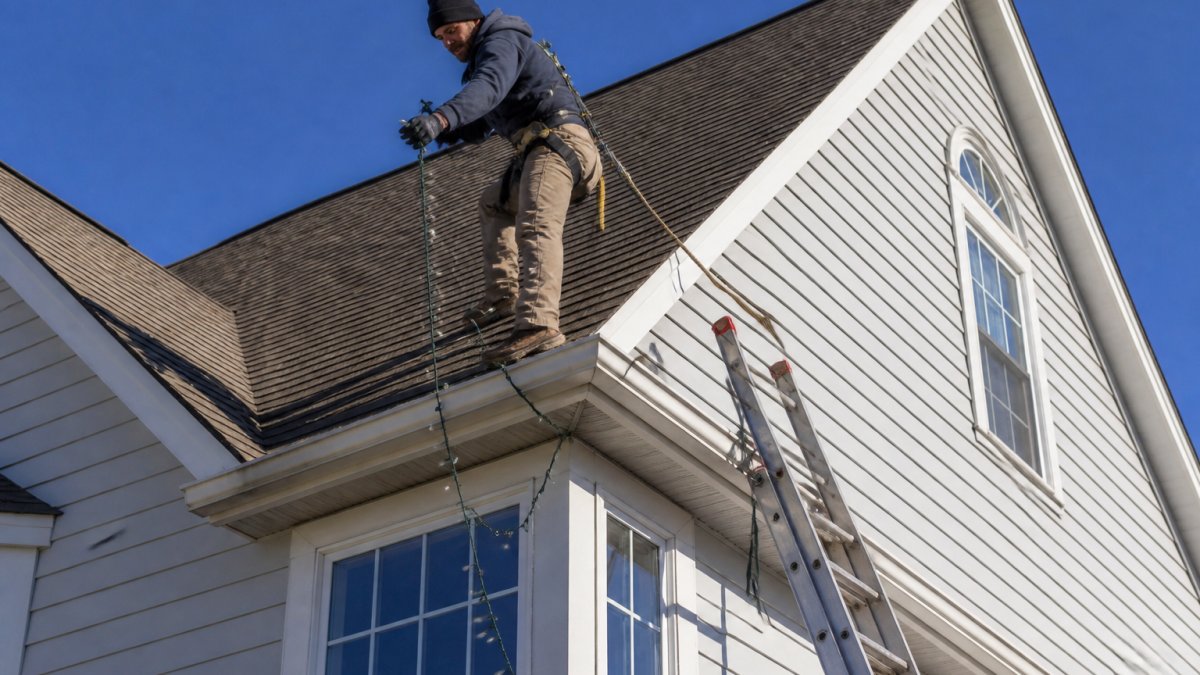
Safety on a steep roof comes down to three things: staying tied off, keeping the ladder stable, and never working alone. But the details are where people get hurt, and where roofs get damaged.
Fall Protection That Actually Works on a Pitch
A harness is only as good as its anchor. On a steep roof, the anchor point must be above the work zone and rated for the load. Roof anchors, ridge anchors, and temporary strap anchors are the common options; a chimney or a vent pipe is not an anchor unless it has been engineered as one.
- Set the ladder at a 4-to-1 angle (1 foot out for every 4 feet up) and use stabilizer arms so the top can't shift.
- Extend the ladder 3 feet above the eave so you have a handhold when you step off.
- Anchor your harness above the work zone, never below.
- Keep both hands free; use a tool belt for clips.
- Never climb on wet, icy, or mossy shingles.
- Keep cords off walkways and use GFCI-protected outlets.
- Have a helper spot you from the ground and hold the ladder foot.
The Consumer Product Safety Commission guidance on ladder safety notes that falls from ladders remain a leading cause of home injuries. A spotter and a stable base prevent most of them.
Protecting the Roof While You Work
Every step on a steep pitch puts stress on the shingles, and the damage often shows up weeks later as a leak. Soft-soled shoes spread weight better than hard soles. Walk on the lower third of each shingle course where the material is supported, not on the exposed butt edge. Keep clip installation to the shingle edge, never through the shingle face. On tile and slate, a cracked tile from a misplaced foot can cost more to fix than the lights cost to install.
Who Pays When Something Breaks
If you hire an installer, ask in writing who is responsible for roof, siding, gutter, and electrical damage caused by their work. A reputable installer carries liability coverage and will put that commitment in the contract. If you DIY, your homeowner's policy may cover a fall or a fire, but it typically won't cover poor workmanship or gradual roof damage from clips. Document the roof condition with photos before the first clip goes up, and again after removal.
Step-by-Step: Hanging Lights on a Steep Roof
Here is the sequence we use on every steep-roof job, from eave to ridge.
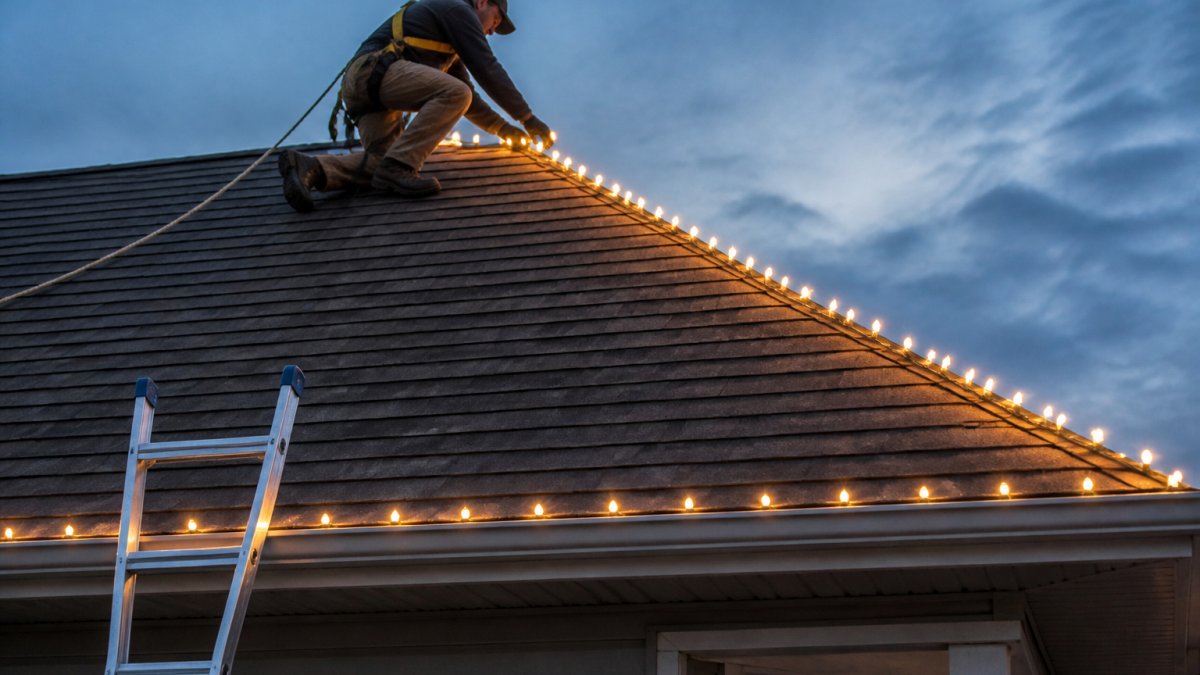
- Plan the run from the ground and mark clip spacing.
- Set the ladder and anchor your harness before climbing.
- Start at the eave and work upward toward the ridge.
- Attach clips first, then press the strand into each clip.
- Keep the strand snug but not tight; leave a little give for cold.
- Work in short sections and check each one as you go.
Anchoring the Run and Managing Slack
Slack is your friend on a steep roof. Thermal expansion and wind flex the wire, so leave a small loop at each turn. Anchor the run at both ends with a wire tie so it can't slide downhill. Never pull a strand tight enough to stress the clip.
Testing and Securing Before You Come Down
Before you descend, plug in the full run and check every section. Look for dark bulbs and loose clips. Secure any dangling cord with a wire tie. Coming down once and finding a dead section means climbing back up, so test while you're already there.
When to Call for Professional Christmas Light Installation
Some roofs simply aren't a DIY job. If your home has a pitch above 8/12, multiple stories, tricky valleys, or fragile tile, professional Christmas light installation is the safer and often cheaper choice once you count ladder rentals and risk.
At Dramatic Outdoor Lighting, our crews handle steep pitches and complex architecture. We bring custom lighting design, expert installation, and full removal and storage, so you never touch a ladder.
Warranties, Damage, and Mid-Season Repairs
Warranty terms are where installers differ most, and where homeowners get surprised. A service warranty covers the installation work, like clips failing or a strand coming loose. A product warranty covers the lights themselves and usually comes from the manufacturer. These are two different promises, and a good contract spells out both.
What an Installation Warranty Usually Covers
A typical seasonal installation warranty covers:
- Workmanship: clips that pull loose, strands that sag or detach, and connections that fail under normal weather.
- Labor: the crew's time to return and fix a covered problem.
- Bulbs and strands: many installers replace burned-out bulbs at no charge during the season; some also replace failed strands.
- Timers and controllers: if the installer supplied them, they're usually covered for the season.
What It Usually Excludes
Read the exclusions before you sign. Common ones:
- Storm and wind damage beyond normal weather.
- Damage from rodents, squirrels, or birds.
- Homeowner alterations, moving clips, adding strands, or re-routing cords yourself.
- Pre-existing roof, gutter, or electrical problems.
- Cosmetic issues like slight color fade.
- Damage from ice dams or snow load.
Duration, Deadlines, and Response Time
Coverage periods vary widely. Ask three questions in writing: How long is the workmanship warranty? By what date must I file a claim? How fast will you respond, same day, next business day, or within a set number of days?
How to Compare Warranty Terms Between Installers
Use this checklist side by side:
| Term | What to Ask |
|---|---|
| Coverage | Bulbs, labor, clips, timers, controllers? |
| Exclusions | Storm, rodents, homeowner changes, pre-existing issues? |
| Duration | Workmanship vs. product, in months or seasons? |
| Claim deadline | Date by which claims must be filed |
| Response time | Same day, next business day, or a set number of days? |
| Service fees | Trip charges or deductibles for a covered repair? |
| Renewal | Does coverage renew each season automatically? |
| Property damage | Who pays for roof, siding, or electrical damage caused by the work? |
What to Get in Writing and How to File a Claim
Get the warranty terms as a separate document, not a line in an estimate. It should name the covered items, the exclusions, the duration, the claim deadline, and the contact for claims. When something fails, photograph the problem, note the date, and submit the claim through the channel named in the contract. Repairs or replacements should be authorized in writing before work begins so there's no dispute about what was covered.
Conclusion
Steep roofs punish shortcuts, and the homeowners who stay safe are the ones who plan before they climb. If the pitch, height, or surface makes you hesitate, that instinct is worth listening to. Dramatic Outdoor Lighting handles steep-roof holiday lighting with custom design, expert installation, and 24-hour maintenance for holiday lighting, plus full removal and storage when the season ends. Request a free consultation and let our team take the ladder work off your list.
Frequently Asked Questions
How do you hang Christmas lights on a steep roof without damaging shingles?
Use clips that slide under the shingle edge or grip the shingle tab without piercing it. Never nail, staple, or screw into shingles, because every hole breaks the shingle seal and invites leaks. Clips made for shingles hold the wire slightly off the surface, which also reduces abrasion. Keep light strings loose enough that wind can move them without pulling on the shingle edge. If a clip feels tight, stop and switch to a different style rather than forcing it.
Is it safe to hang Christmas lights on a steep roof yourself?
It depends on the pitch, the height, and the surface. Many steep roofs are too dangerous for a homeowner on a ladder, especially when temperatures drop and shingles or gutters get slick. If you cannot keep three points of contact, or the roof rises above a single-story eave, hire a professional. Professional Christmas light installation crews carry ladders, harnesses, and insurance, so an injury or a damaged roof does not become your liability.
What happens if lights go out mid-season after installation?
That depends on the warranty terms you signed. Ask before installation whether the service warranty covers burned-out bulbs, failed strands, and storm damage, and what the response time is. Dramatic Outdoor Lighting offers 24-hour maintenance for holiday lighting during the season. Keep your written warranty and the installer's contact number handy. If you install yourself, plan to inspect strands monthly and keep spare bulbs and fuses on hand.
How much does professional installation on a steep roof cost?
Pricing depends on roofline length, roof pitch, height, and how much design work you want. A steep roof takes more labor and equipment than a standard ranch home, which affects the quote. Ask for a written estimate that separates installation, removal, storage, and any maintenance visits. Request a free consultation to get pricing specific to your property.