 blog
How to Choose Holiday Lighting for Your Business?
Last Updated: October 31, 2026
Quick Summary
Choose holiday lighting for your business by first setting a goal, then matching colors to your brand, picking LED fixtures, and checking electrical capacity. Plan installation early, and protect the investment with professional storage and maintenance. Each step affects both appearance and safety.
- Write down whether your primary goal is visibility, brand reflection, or atmosphere before requesting quotes.
- Choose LED over incandescent because LEDs use less electricity, run cooler, and last longer.
- Calculate each circuit's load and keep it well below its rated capacity before adding strands.
- Ask every provider to itemize quotes by design, fixtures, installation, removal, storage, and maintenance.
- Schedule consultations in late summer to early fall, when the best installation windows remain open.
Table of Contents
- Start With Your Goal: Visibility, Brand, or Atmosphere
- Way 1: Match Colors and Lighting Design to Your Brand Identity
- Way 2: Choose LED Over Incandescent for Durability and Energy Use
- Way 3: Select Weather-Resistant, Commercial-Grade Fixtures and Check Electrical Load
- Way 4: Plan Your Commercial Holiday Lighting Installation Cost and Timeline
- Way 5: Build Your Plan Around Professional Storage, Maintenance, and Best Practices for Commercial Outdoor Lighting Design
- Book Your Free Consultation Before the Season Fills
- Frequently Asked Questions
Start With Your Goal: Visibility, Brand, or Atmosphere
Choosing holiday lighting for a business starts with one question: what should the lights do? A commercial grade Christmas lights guide for business covers the options in more depth before you pick a direction.
Most business owners want one of three results. Some want passersby to notice the building from the road. Others want the property to reflect the brand's personality. Some simply want a welcoming atmosphere for customers and staff.
Write down your primary goal before you request quotes. A visibility goal calls for bright, high-contrast lighting along the roofline and entrance. A brand goal calls for a restrained palette that matches your signage.
Way 1: Match Colors and Lighting Design to Your Brand Identity
A holiday display should look like it belongs to your business. Lights that clash with your logo or storefront can make a property look cluttered rather than festive.
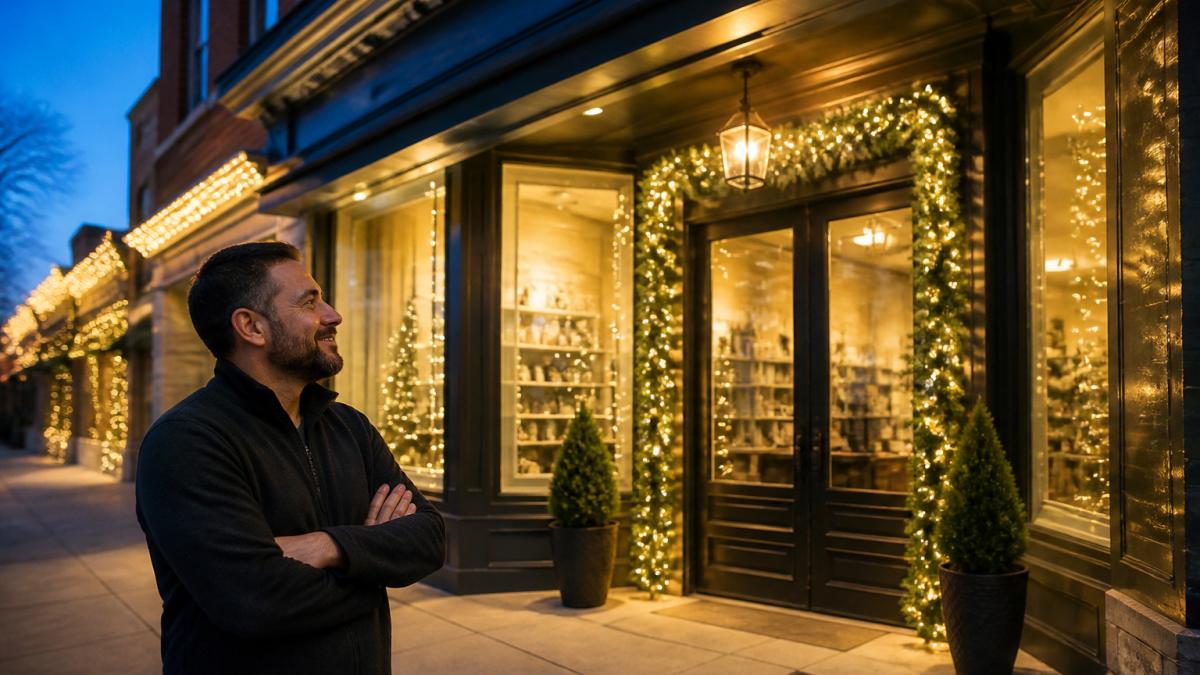
Start by listing your brand colors and the materials on your building. Warm white pairs well with brick and natural stone. Cool white suits modern glass and metal. Multicolor displays can work, but they usually suit businesses with playful brands.
Choosing color temperature and design options
Color temperature changes how the whole property feels. Warm white, often labeled around 2700K to 3000K, looks inviting and traditional. Cooler white looks crisp and contemporary.
Consider these design options:
- Outline the architecture: Trace the roofline, windows, and doorways for a clean look.
- Highlight the entrance: Focus brighter light on the door so customers find it easily.
- Layer the landscape: Add lights in trees and shrubs to create depth.
Ask your provider to show a design mockup or walk the property at night before installation. Our holiday light installation service warranty page explains what coverage applies once the work is done. A design that looks good in daylight can look very different after dark.
Way 2: Choose LED Over Incandescent for Durability and Energy Use
LED lights are the standard choice for commercial holiday displays. They use less electricity, run cooler, and last longer than older incandescent bulbs.
Lower power draw matters when a property runs lights for many evenings each season.
Incandescent bulbs still produce a warm glow that some owners prefer. If you choose them, expect higher energy costs and more frequent bulb replacements.
Way 3: Select Weather-Resistant, Commercial-Grade Fixtures and Check Electrical Load
Commercial displays stay up longer, serve more foot traffic, and face more weather than residential ones. The fixtures and the electrical plan behind them determine whether the display runs safely all season or becomes a maintenance problem in week two.
What "commercial-grade" actually means
Retail strings sold for home use are not built for a business facade. Commercial-grade fixtures typically share these traits:
- Outdoor and wet-location ratings: Look for fixtures and connectors rated for wet locations, with sealed connections that keep moisture out of the socket.
- Heavier wire and insulation: Outdoor-rated cord jackets resist sunlight, cold, and abrasion better than indoor wire.
- Replaceable components: Commercial strands often allow individual bulb or section replacement rather than discarding the whole string.
Calculating electrical load before you add a strand
Electrical load is the most overlooked part of commercial holiday lighting. The basic method:
- Find the wattage per strand on the product label or spec sheet.
- Multiply by the number of strands on each circuit.
- Compare the total to the circuit's rated capacity, and keep the load well below the maximum rather than at the limit.
- Map which outlets and circuits power which sections of the display so a tripped breaker can be traced quickly.
A common pattern is a single outdoor circuit already shared with parking-lot lighting, signage, or seasonal equipment. Adding a large display to that circuit can trip breakers during peak evening hours. Confirm available capacity before installation, and ask the installer to document the circuit map.
Code compliance and safety
Commercial installations should follow the National Electrical Code as adopted in your jurisdiction, along with any local amendments (Learn where the NEC is enforced.). Key points most business owners should confirm with their installer:
- Fixtures and cords are listed for outdoor use and connected to ground-fault protection where required.
- Temporary wiring is secured and kept clear of walkways, doorways, and fire exits.
- Connections are protected from standing water and snowmelt.
Your local fire authority may also have rules for temporary decorations in commercial occupancies. The National Fire Protection Association publishes guidance on holiday decorations that many property managers use as a reference point. You can review it at NFPA guidance on holiday decorations.
Accessibility and inclusive design
A display that looks impressive but blinds or blocks customers defeats its purpose. Practical accessibility considerations:
- Glare control: Avoid aiming bright fixtures at eye level along walkways or at the entrance. Shield or redirect light so customers can see the path and the door.
- Clear paths: Keep cords, stakes, and fixtures out of walking routes and away from curb ramps and accessible parking access aisles.
- Visibility: Light the entrance evenly so customers with low vision can identify the door and any steps.
Business-type considerations
Different properties need different fixture strategies:
- Storefronts: Prioritize entrance visibility and roofline outline; keep walkway lighting even and glare-free.
- Restaurants: Warmer color temperatures and layered landscape lighting suit evening dining, but keep fixtures away from seating and service paths.
- Offices: Restrained palettes and clean architectural outlines read as professional; avoid high-flash effects near entrances.
Getting the fixture grade and electrical plan right at the start is cheaper than fixing them mid-season. It also makes the display easier to store, repair, and reuse next year.
Way 4: Plan Your Commercial Holiday Lighting Installation Cost and Timeline
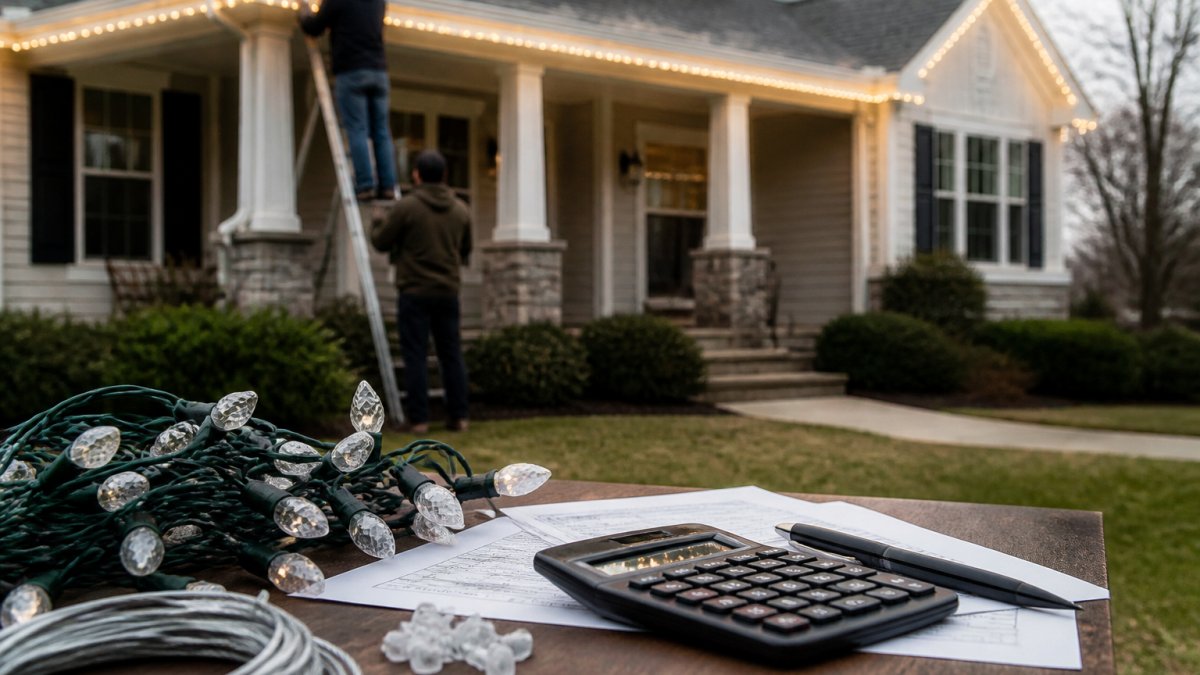
Holiday lighting is a capital and operating decision, not just a design choice. The businesses that get the most value from a display treat it like any other seasonal investment: they compare the full cost of ownership, lock in dates early, and measure whether the spend paid off.
What drives the price
Pricing depends on property size, design, fixture grade, access, and service level, so request a quote from Dramatic Outdoor Lighting for current figures. The main cost drivers are:
- Property size and linear footage: Rooflines, window frames, trees, and walkways are measured in linear feet. A single-story storefront and a multi-tenant building with a large parking frontage are very different projects.
- Design complexity: Outlining architecture is labor-intensive but predictable. Custom shapes, color-changing elements, and layered landscape lighting add design time and fixture count.
- Fixture grade: Commercial-grade LED strands and sealed connectors cost more up front than retail-grade strings but typically last multiple seasons and reduce mid-season failures.
Total cost of ownership
A useful way to compare quotes is to add up every cost across the season and divide by the number of seasons you expect the fixtures to last:
- Installation and removal labor: Often the largest line item. Ask whether removal is included or billed separately.
- Energy: LED strands draw a fraction of the electricity of incandescent bulbs. Multiply the total connected wattage by the hours the display runs each evening and by your commercial electric rate to estimate the seasonal energy cost.
- Maintenance: Mid-season bulb or strand failures, storm damage, and timer adjustments. Confirm whether service calls are included.
A lower first-year quote can cost more over three seasons if it uses retail-grade fixtures, excludes removal, or bills maintenance separately. Ask every provider for the same scope so quotes are comparable.
Timeline milestones
Schedules fill quickly once the season begins. A practical timeline for most commercial properties looks like this:
- Late summer to early fall: Request consultations and design walkthroughs. This is when the best installation windows are still open.
- Early fall: Approve the design, confirm electrical capacity, and sign the agreement.
- Mid to late fall: Installation, ideally completed before the busiest shopping weeks.
Questions that protect your budget
- Is removal included, and on what date?
- Are fixtures owned or rented, and who repairs them mid-season?
- Are installers insured and licensed for work at height? You can learn how to hire insured Christmas light installers before you book.
The table below summarises the key cost drivers, timeline milestones, and questions to settle before committing to a provider.
| Stage | What to do | Timing |
|---|---|---|
| Consultations | Request design walkthroughs and quotes | Late summer to early fall |
| Approval | Approve design, confirm electrical capacity, sign agreement | Early fall |
| Installation | Complete install before busiest shopping weeks | Mid to late fall |
| Maintenance | Scheduled checks and on-call response | During the season |
| Removal | Test, then store or dispose of fixtures | January |
| Quote comparison | Itemize by design, fixtures, installation, removal, storage, maintenance | Before signing |
Way 5: Build Your Plan Around Professional Storage, Maintenance, and Best Practices for Commercial Outdoor Lighting Design
A strong holiday plan does not end when the season does. Proper storage protects your investment and makes next year's installation faster.
Professional storage means the lights are cleaned, tested, and organized before they go into climate-controlled storage.
Regular maintenance keeps the display looking sharp during the season. Check for burned-out lights and loose clips after storms. Clean fixtures periodically so dust and debris do not dim the glow.
Best practices for commercial outdoor lighting design come down to planning ahead. For the rest of the seasonal plan, see holiday lighting for business properties. You can review it at NFPA guidance on holiday decorations.
Book Your Free Consultation Before the Season Fills
Choosing holiday lighting for a business comes down to five steps: set your goal, match your brand, pick efficient fixtures, plan your electrical load, and protect the investment with professional storage and maintenance. Each step affects how the property looks and how safely it runs.
Dramatic Outdoor Lighting offers custom lighting design, expert installation, white-glove holiday service with removal and storage, and 24-hour maintenance for holiday lighting. Our team serves Pinehurst, Southern Pines, Aberdeen, and Whispering Pines.
Frequently Asked Questions
What are the benefits of professional holiday lighting for businesses?
Professional holiday lighting gives a business a consistent, well-engineered display that holds up through winter weather and reflects the brand. Installers place lights so the storefront, entrance and signage are visible from the road. Professional teams also handle removal and storage, so the system is ready the next season and the business owner avoids ladders, tangled strands and electrical risk. Pricing depends on property size, fixture count and service scope, so request a quote from Dramatic Outdoor Lighting for current figures.
How do I choose the right color scheme for commercial Christmas lights?
Start with your brand palette and the look of your building. Warm white suits traditional brick and stone storefronts, while cool white or multicolor can fit modern or contemporary designs. Keep the scheme to two or three colors so the display reads as intentional rather than busy. Test a few options on a sample section of the facade before committing to the full installation, since colors look different against different materials and at night.
Are LED lights better for commercial holiday displays?
For most commercial displays, yes. LED fixtures draw far less power than incandescent bulbs, run cooler, and last considerably longer, which reduces replacement work during the season. Incandescent lights still produce a warm glow some owners prefer, but they consume more energy and fail more often in cold, wet conditions.
How can holiday lighting improve business curb appeal?
Lighting draws the eye to the parts of the property you want noticed: the entrance, signage, windows and landscape features. A well-designed display makes the building look cared for and visible after dark, when many storefronts otherwise fade into the background. Consistent, professionally installed lights also signal reliability, which matters to customers deciding whether to stop in.
Ready to plan a holiday display that reflects your business? REQUEST A FREE CONSULTATION with Dramatic Outdoor Lighting today. Our team can review your property, discuss your goals, and provide a custom quote so your lights are ready before the busiest weeks arrive.