 comparison
Holiday Lighting for Business Properties: A 2026 Guide
Table of Contents
- Why Holiday Lighting Matters for Business Properties
- Understanding Professional Holiday Lighting Cost
- Custom Design and Installation for Commercial Properties
- Commercial Christmas Light Maintenance During the Season
- Holiday Light Removal and Storage Services
- Using a Holiday Lighting Quote Checklist to Compare Providers
- Safety, Insurance, and Compliance for Business Installations
- Scheduling and Service Guarantees
- Frequently Asked Questions
Last Updated: October 21, 2026
Why Holiday Lighting Matters for Business Properties
A holiday lighting business transforms southern pines properties into strategic investments that shape how customers perceive your building during the year's busiest shopping season, enhancing curb appeal, visibility after dark, and differentiation.
The difference between amateur and professional installations is immediate. A well-designed system turns your building into a destination: customers notice, take photos, and tell their friends, organic marketing that's hard to manufacture.
Understanding Professional Holiday Lighting Cost
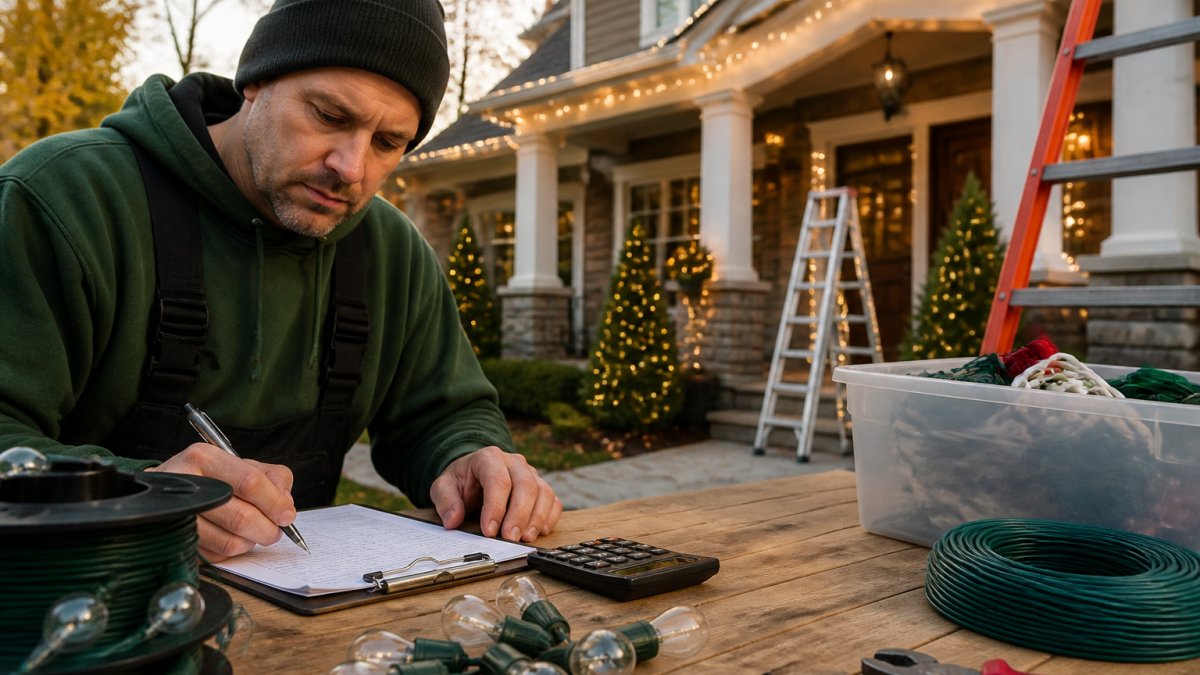
Most holiday lighting pages say cost 'depends on your property' and stop there. What you need is a clear picture of the cost drivers, what belongs in a commercial quote, and how to compare two quotes without getting fooled by the bottom line.
What drives the price of a commercial installation
Professional installers price commercial work off measurable inputs. The main drivers are:
- Linear footage and roof complexity. A single-story storefront with a straight parapet prices very differently from a two-story building with gables, dormers, and multiple rooflines. Pitch matters too, steep roofs change labor and equipment needs.
- Access and equipment. Flat commercial roofs, parking lot setbacks, and height above roughly one story often require lifts rather than ladders. Lift rental, setup, and a second crew member are real line items.
- Fixture type and count. Commercial-grade LED strings, C9 bulbs, and clips cost more than retail strands but last multiple seasons and hold color and brightness. Runs, drops, and wrapped elements drive material cost.
What a commercial quote should itemize
Ask every provider for the same breakdown so you can compare like with like. A complete quote separates:
- Design and site survey
- Fixtures and materials (with type and quantity)
- Installation labor and equipment
- Electrical work, if any
- Maintenance visits and response commitment
- Removal and takedown
- Storage
- Warranty terms
A single lump sum makes it impossible to tell whether the low number is a better deal or simply excludes maintenance, removal, and storage that a higher quote includes.
How to compare bids without a local price average
There is no reliable public benchmark for commercial holiday lighting in a given market, and any page quoting a flat per-foot or per-building price is guessing. Compare bids on these dimensions:
- Scope match. Do both quotes cover the same rooflines, trees, and entryways? Ask each provider to mark up the same photo of your building.
- Fixture specification. Are they quoting commercial-grade LED with a stated warranty, or retail strands? Get the brand and model if possible.
- Service inclusions. How many maintenance visits? What response time for an outage? Is removal and storage included?
Budgeting across multiple years
Many business owners treat holiday lighting as a one-time expense, then discover the second year is cheaper because fixtures are reusable and storage is already arranged. When comparing a multi-season contract against annual installs, ask whether the provider offers a multi-year rate and guarantees stored fixtures work the following season.
Custom Design and Installation for Commercial Properties
Custom design separates a standard light installation from one that enhances your brand. A designer walks your property, understands your architectural style, and creates a lighting plan that complements, not competes with, your building's features.
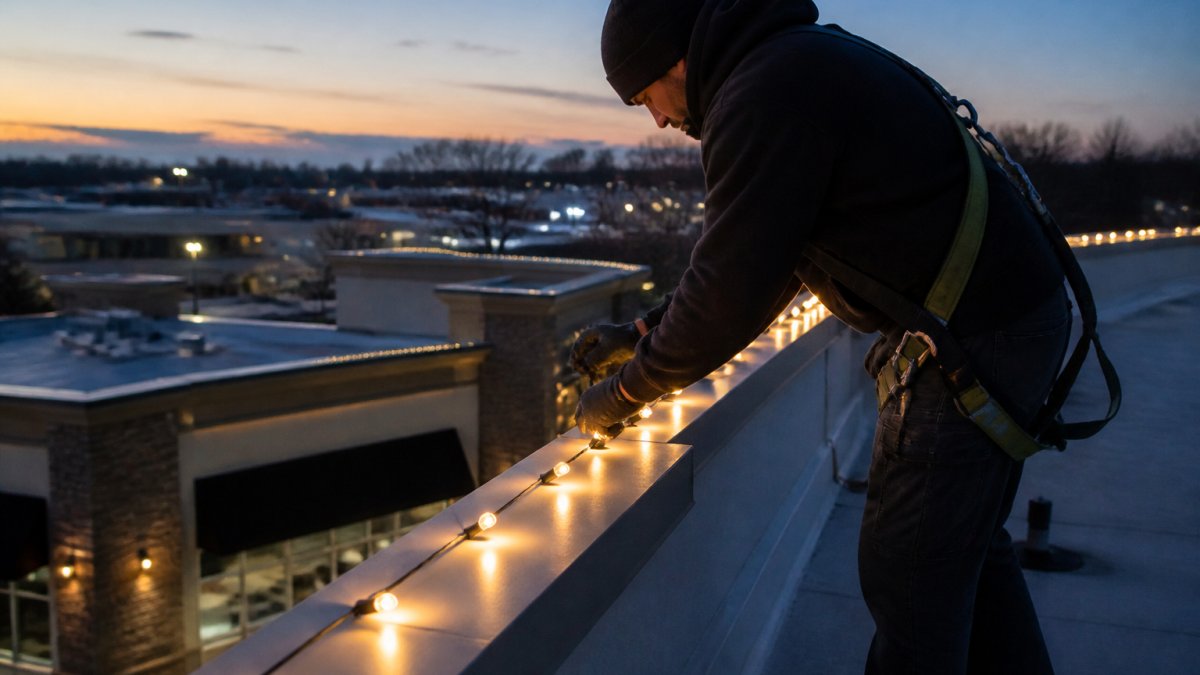
The design process typically involves a site visit, discussion of your goals, and mockups or renderings showing the finished look. This matters because holiday lighting for southern pines businesses can either enhance your property's best features or overwhelm them with poor placement.
Installation on commercial properties requires different expertise than residential work: steeper rooflines, more complex electrical systems, and stricter safety protocols.
Roofline and Architectural Lighting
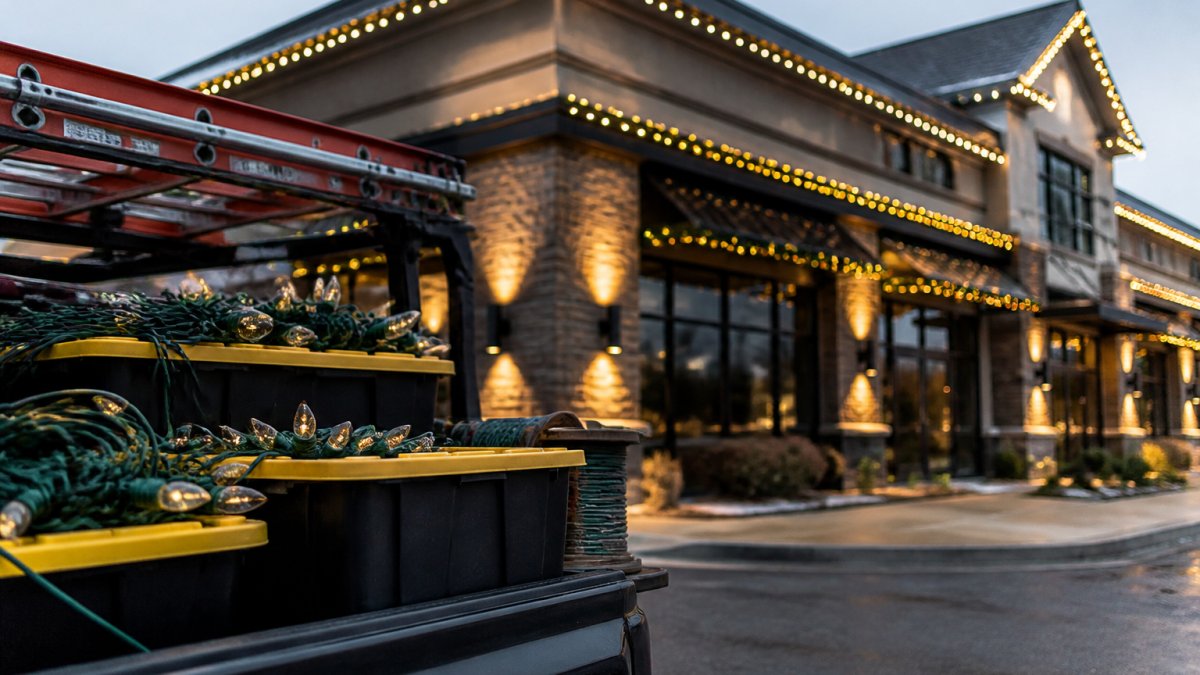
Roofline lighting defines your building's silhouette after dark. Executed well, it reads as professional and premium; done poorly, it looks chaotic and cheap.
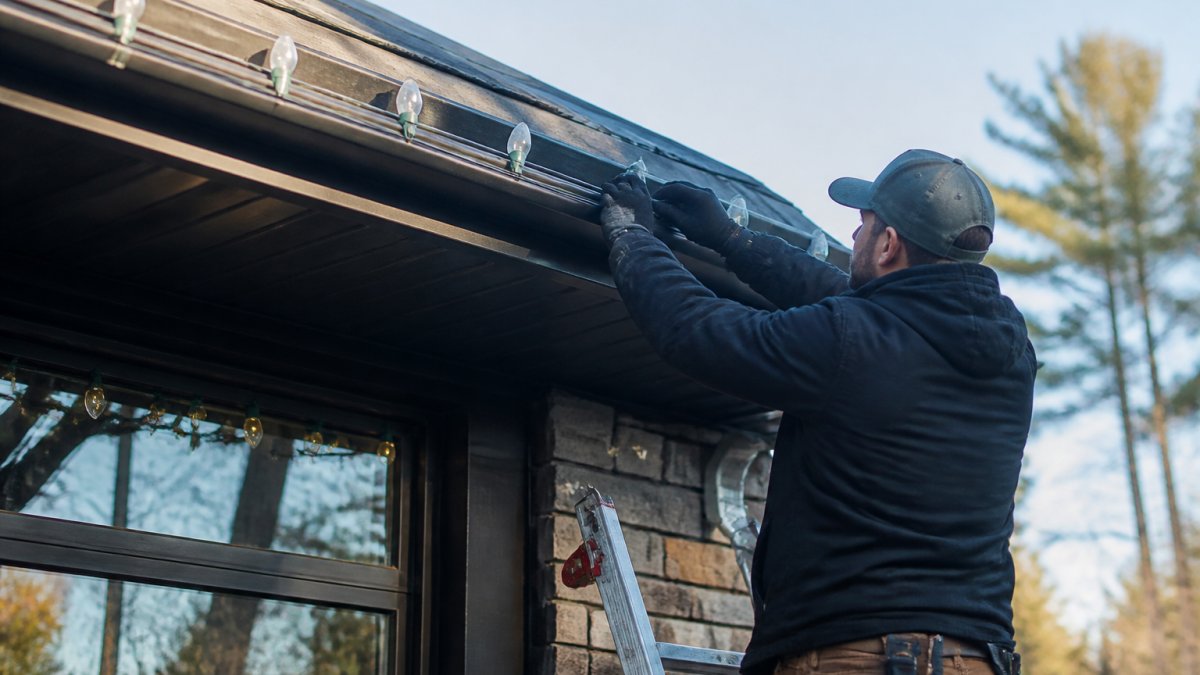
The best roofline installations use clear, consistent spacing and follow your architecture's natural lines.
Architectural lighting goes beyond the roofline, highlighting columns, entryways, signage, and other defining features. This layered approach creates depth a simple string of lights can't achieve.
Landscape and Tree Lighting
Trees become focal points during the holiday season. Uplighting from the ground creates dramatic silhouettes, while wrapping trunks and major branches adds texture and draws the eye upward.
For commercial properties, landscape lighting should complement your building's overall design rather than compete with it.
Professional installers position lights to avoid glare, create even coverage, and highlight the tree's natural structure rather than obscuring it, the detail that separates a custom design from a generic installation.
Commercial Christmas Light Maintenance During the Season
Once your holiday lighting business installation for southern pines properties is complete, maintenance becomes critical. Lights fail. Connections loosen.
Most professional providers offer scheduled maintenance visits: inspecting connections, replacing burned-out bulbs, adjusting positioning after wind, and verifying full brightness.
The alternative, hoping nothing breaks and scrambling when it does, is expensive and stressful.
A maintenance agreement should specify response time for emergency repairs, inspection frequency, and what's included versus extra.
Holiday Light Removal and Storage Services
Takedown is where many business owners encounter problems. After the holidays, the last thing you want is a pile of tangled lights cluttering your storage space until next November.
Professional removal services handle the entire process: carefully taking down lights, inspecting for damage, testing each section, organizing by type, and storing in a climate-controlled space.
Removal and storage are often included in comprehensive holiday lighting packages; if quoted separately, factor them into your total investment.
Some providers store fixtures at their facility; others return everything in organized, labeled boxes.
Using a Holiday Lighting Quote Checklist to Compare Providers
A structured approach to comparing quotes prevents confusion and ensures you're evaluating providers fairly.
Ask each provider the same questions in the same order. Document their answers.
Key items to verify: Are fixtures LED or traditional? What warranty applies to bulbs and fixtures? Is the installer licensed and insured?
Don't skip the reference check. Call business owners who've used the provider.
Safety, Insurance, and Compliance for Business Installations
For a business, holiday lighting is a liability question before it is a decoration question. Your property is open to customers, employees, and vendors during the season. If a fixture fails, a connection arcs, or a strand falls, the exposure lands on the property owner. That is why the safety and insurance details of an installer matter more than the design pitch.
The insurance documents to request
Do not accept a verbal assurance that an installer is 'fully insured.' Ask for certificates and verify them:
- General liability insurance. This covers third-party injury and property damage, for example, a customer injured by a falling fixture or damage to your building during installation. Ask for a certificate of insurance naming your business as an additional insured for the duration of the project.
- Workers' compensation. If a crew member is injured on your roof and the installer does not carry workers' comp, the claim can migrate to your property policy. Confirm coverage for the state where the work happens.
- Commercial auto, if equipment or lifts are on site. Less commonly requested, but relevant if a lift or trailer is parked on your lot.
Verify the certificate by contacting the insurer or agent listed on it, a PDF alone can be altered. This takes a few minutes and is the single most effective protection against a liability surprise.
Licensing and electrical work
Holiday lighting sits in a gray area: hanging strands is not always licensed electrical work, but adding circuits, outlets, or panel connections is. Ask the installer directly:
- Who performs any new electrical work, and are they licensed for it in this jurisdiction?
- Will the installation use existing exterior circuits, or will new dedicated circuits be added?
- Are all outdoor connections GFCI-protected, and are timers or photocells used to control load?
A professional installer will answer these without hesitation and will not tap into interior circuits or overload existing ones to avoid the cost of proper electrical work.
What 'to code' actually means for a seasonal install
The National Electrical Code (NEC) is the model code most jurisdictions adopt, and it governs outdoor wiring, grounding, GFCI protection, and temporary vs. permanent installations. In practice, for a commercial holiday display that means:
- Outdoor receptacles and circuits are GFCI-protected.
- Cords and connections are rated for outdoor and wet locations.
- Fixtures are listed by a recognized testing laboratory (look for a UL or ETL mark on commercial-grade products) (Lighting Standards and Certification).
Your local jurisdiction may also have permitting or inspection requirements for temporary structures or electrical work. Ask the installer whether any permits are required for your scope and who pulls them.
Property and access safety
Commercial installations introduce access risks that residential work does not. Confirm the installer's practices around:
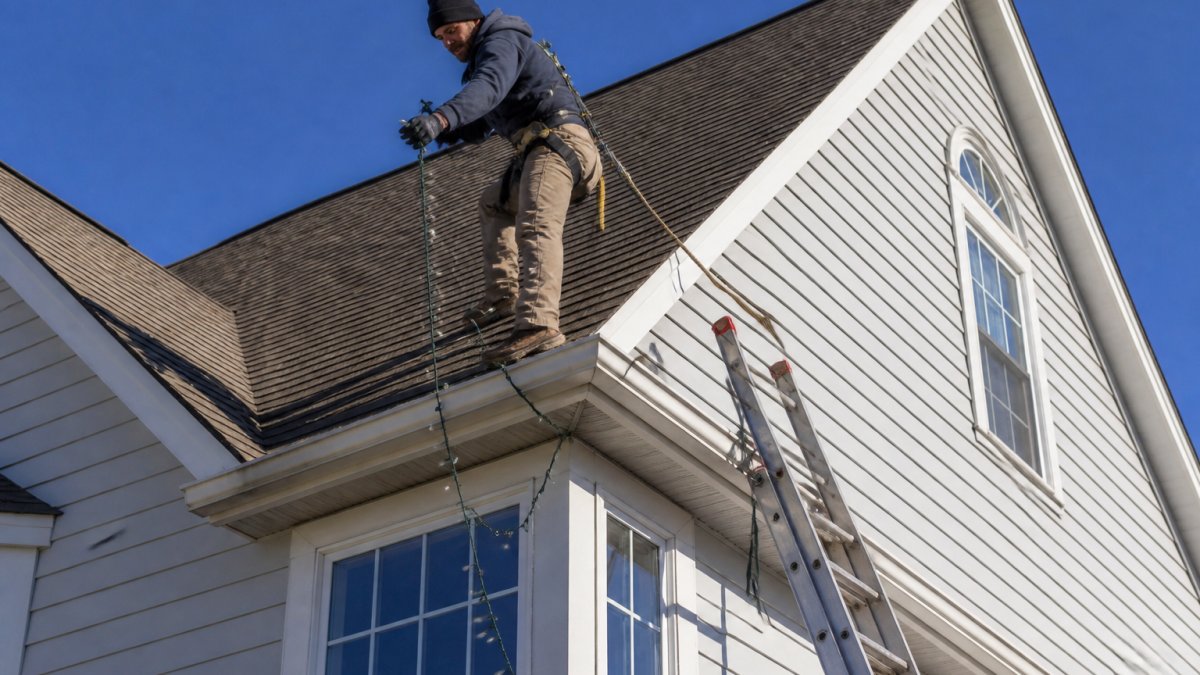
- Ladder and lift safety. Fall protection, spotter requirements, and whether lifts are operated by trained personnel.
- Roof protection. Walk pads or other measures to avoid puncturing or scuffing commercial roofing membranes.
- Public protection. Barricades or cones where work occurs near customer entrances, sidewalks, or parking areas, and scheduling around operating hours.
Questions to ask before signing
A short verification script keeps the comparison fair across providers:
- Can you send a certificate of insurance naming us as additional insured?
- Who is licensed for any electrical work, and will permits be pulled if required?
- Are all fixtures listed and rated for outdoor commercial use?
- What is your written weather and post-storm inspection policy?
- What happens if a fixture fails and causes damage, whose insurance responds?
Scheduling and Service Guarantees
Booking your holiday lighting installation early matters. The best installers fill their schedules by mid-September.
Service guarantees should specify what happens if lights fail before the scheduled maintenance visit.
Confirm the installation timeline upfront. When will the design be finalized? When will installation begin?
A reliable provider commits to a completion date and honors it. They understand that holiday retail timing is non-negotiable.
The difference between a standard installation and a professional holiday lighting system for southern pines businesses comes down to expertise, attention to detail, and commitment to reliability. Our team handles everything from custom design through removal and storage, with 24-hour maintenance for holiday lighting and a lifetime warranty on landscape lighting fixtures. Request a free consultation to see how professional holiday lighting can transform your business property and drive customer engagement during the most important retail season of the year.
Frequently Asked Questions
How much does professional holiday lighting cost for a business?
Professional holiday lighting cost depends on your property size, design complexity, roofline height, and installation scope. Commercial properties typically require more materials and labor than residential installations. Pricing also varies by service area and provider. Contact a professional installer for a detailed quote that reflects your specific property, architectural features, and lighting goals. Most providers offer free consultations to assess your needs.
What should I include in a holiday lighting quote checklist when comparing providers?
Request quotes that clearly specify installation dates, removal and storage services, maintenance response times, insurance coverage, warranty details, and material specifications (LED vs. traditional lights, fixture types). Ask whether the quote includes design consultation, setup of timers, and takedown labor. Confirm service area coverage and whether the provider handles seasonal decorations like pre-lit greenery. Verify licensing and ask for references from similar commercial properties in your area.
Do professional installers remove and store holiday lights after the season?
Yes, full-service holiday lighting providers typically include removal and storage as part of their seasonal service. Professional removal involves safely taking down lights, organizing fixtures, testing them for next year, and storing them properly to prevent damage. This white-glove service eliminates the burden of managing storage yourself and ensures your lights are ready for the following holiday season. Confirm these services are included in your contract and clarify any additional fees.
What maintenance should commercial holiday lighting receive during the season?
Commercial Christmas light maintenance includes regular inspections for burned-out bulbs, loose connections, and weather-related damage. Many professional providers offer 24-hour maintenance for holiday lighting during the holiday season to address outages or repairs quickly. Maintenance may also include checking timers, ensuring electrical safety, and replacing damaged fixtures. Year-round architectural lighting systems require different care than seasonal holiday displays. Ask your installer about their maintenance schedule and emergency response availability.